

What is a night guard, and how does it protect your teeth?
A night guard is a splinting device that fits over your teeth, usually on either the upper or lower jaw. In some cases, appliances may be used on both arches.
It protects your teeth by creating a barrier between the upper and lower teeth. It also provides a smooth surface for the opposing teeth to glide across, rather than allowing them to grind directly against each other.
This helps reduce wear and protects your natural teeth and existing dental restorations from damage caused by clenching and grinding.
What are the most common reasons for needing a night guard?
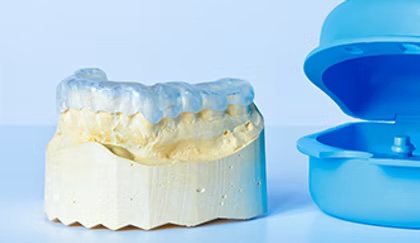
One common reason for recommending a night guard is discomfort involving the temporomandibular joint, or TMJ. Some patients experience jaw pain or muscle tension that may benefit from an occlusal appliance.
Another important reason is protecting existing dental work. If you have multiple crowns, implants, or other restorations, a night guard may help reduce damage caused by excessive biting forces.
How does a night guard help with teeth grinding or bruxism?
When you grind your teeth, the upper and lower teeth rub against each other, gradually wearing away natural tooth structure.
A night guard creates a protective surface between your teeth. Instead of the natural teeth grinding directly against one another, the appliance absorbs some of the contact and helps reduce wear.
It also provides a smooth surface that allows the opposing teeth to move more freely, helping protect the enamel and existing restorations.
Can a night guard reduce clenching or grinding at night?
It's difficult to say whether a night guard will actually reduce the amount of clenching or grinding. Its primary purpose is to protect your teeth from the effects of those habits.
By creating a small separation between the upper and lower teeth and providing a smooth biting surface, certain night guard designs may also help reduce muscle discomfort or tension.
However, the effect on muscle activity varies from person to person, and a night guard doesn't necessarily stop bruxism itself.
What are the benefits of using a night guard for TMJ?
A night guard may help relieve certain symptoms associated with temporomandibular joint disorders, including jaw discomfort and muscle tension.
By providing a smooth surface for the teeth to move against, the appliance may help reduce strain on the jaw muscles and improve comfort.
However, night guards don't work for every type of TMJ disorder. Their effectiveness depends on the underlying diagnosis, so it's important to have your jaw evaluated before choosing treatment.
What is the difference between over-the-counter and custom night guards?
There are significant differences between over-the-counter and custom-made night guards.
Over-the-counter guards are generally designed to fit a wide range of mouths, so they can be bulkier and less comfortable. Some patients find them difficult to wear throughout the night.
A custom night guard is made specifically for your teeth and bite. Because it's designed to fit your mouth, it can often be made with less unnecessary bulk, making it more comfortable for your tongue and cheeks.
A more comfortable fit can also make it easier to wear the appliance consistently.
Are there different night guards for clenching and grinding?
Many of the same principles apply when designing night guards for clenching and grinding. We want to create a protective surface between the upper and lower teeth and allow appropriate jaw movement.
However, the specific design, material, and thickness of the appliance may vary depending on your symptoms, bite, and the amount of force you place on your teeth.
We'll evaluate your individual needs before recommending the appropriate type of guard.
How do you know if you need a custom night guard?
If you have multiple crowns, implants, or other dental restorations, a custom night guard may be worth considering to help protect that dental work.
It's also a good idea to discuss a night guard with your dentist if you've been told that you grind or clench your teeth.
In general, I recommend a custom-made night guard because it can be designed specifically for your teeth, bite, and treatment needs.
Are custom night guards more effective than store-bought options?
Custom night guards often provide a more precise fit than store-bought appliances, which can make them more comfortable and easier to wear consistently.
They're also designed around your individual bite, allowing your dentist to evaluate how the upper and lower teeth contact the appliance.
Some over-the-counter guards may provide temporary protection, but a poorly fitting appliance can cause discomfort or create unwanted changes in how your teeth come together.
For patients who need ongoing protection from clenching or grinding, I generally recommend a professionally fitted night guard.
How do you properly clean a night guard?
When you remove your night guard in the morning, rinse it with water and gently clean it using a soft toothbrush and a cleaning product recommended for the appliance.
A mild soap may be appropriate for some night guards. If you're using toothpaste, make sure it isn't abrasive and that it's suitable for the material.
After cleaning, allow the appliance to dry as directed and store it in its protective case. Keep it away from pets because animals sometimes chew on night guards.
How often should a night guard be replaced?
There's no set replacement schedule for every night guard. Some appliances can last for many years, while others may need replacement sooner.
The lifespan depends on how heavily you clench or grind, the material used, and how well you care for the appliance.
I've seen night guards last more than 10 years. In fact, I've had my own night guard for over 10 years, and it's still functioning well.
We'll check your appliance during dental visits to determine whether it still fits properly and provides the protection you need.
Are night guards expensive, and does insurance cover them?
The cost of a night guard depends on the type of appliance and the materials used. I consider a custom night guard a worthwhile investment because it can help protect your natural teeth and existing dental restorations.
Dental insurance may cover part of the cost, depending on your specific plan and the reason the appliance is recommended.
It's important to check your insurance benefits to understand what coverage may be available.
How does a dentist determine the right fit for a night guard?
We begin by taking impressions or digital scans of your upper and lower teeth. We also evaluate your bite and how your jaws come together.
In some cases, we'll take a special bite record to help determine the appropriate separation between the upper and lower teeth.
Using this information, we create a custom appliance designed for your individual bite and treatment needs.
What is a sleep apnea appliance, and how is it different from a night guard?
A sleep apnea appliance is different from a traditional night guard. While a regular night guard is designed primarily to protect your teeth from clenching and grinding, an oral appliance for sleep apnea is designed to help maintain an open airway during sleep.
Many sleep apnea appliances work by positioning the lower jaw slightly forward, which can help reduce airway obstruction in certain patients.
Sleep apnea can cause repeated interruptions in breathing during sleep, sometimes leading to brief awakenings that you may not remember.
These appliances require proper evaluation and fitting, and treatment should be coordinated with a qualified sleep healthcare professional.
Can children or teens use night guards for clenching or grinding?
Children and teenagers can sometimes benefit from night guards, but the decision depends on their age, dental development, and individual symptoms.
Because their teeth and jaws are still developing, it's important to have a dentist evaluate whether an appliance is appropriate and what type should be used.
If your child or teenager clenches or grinds their teeth, schedule an examination to discuss the available options.
What should you do if your night guard doesn't fit properly?
If your night guard becomes uncomfortable or no longer fits properly, contact your dentist for an evaluation.
Sometimes the teeth have shifted, or the appliance has become worn or damaged. Your dentist can determine what's causing the problem and whether the night guard can be adjusted or repaired.
If the appliance can no longer provide an appropriate fit, we may recommend replacing it with a new custom night guard.
If you’re ready to schedule an exam or would like to learn more about our services, we’d love to hear from you. Call us at (585) 522-1922 or email [email protected]. We look forward to caring for your smile.