
Sleep Apnea Dentist
If you are searching for a Rochester, NY dentist for sleep apnea help, Dr. Isaac Kuyunov, a leading prosthodontist, provides solutions for mild-to-moderate obstructive sleep apnea (OSA) — primarily through custom-made oral appliances. Sleep apnea appliances help keep your airway open while you sleep by gently repositioning the jaw or tongue forward. These are most commonly called night guards and are more formally known as Mandibular Advancement Devices (MADs).
What is sleep apnea?
Sleep apnea, also known as Obstructive Sleep Apnea Syndrome (OSA), is the most common type of breathing disorder that occurs while you sleep. It is a narrowing of your airway that restricts or blocks air from entering your lungs. This interruption in breathing causes your sleep cycle to fragment, preventing you from getting a healthy night's sleep. Sleep apnea is more likely to occur in individuals who suffer from obesity, enlarged tonsils, or when hormone levels increase.
What is Central Sleep Apnea?
There is a less common form of sleep apnea called Central Sleep Apnea, which happens when your brain does not send the signals needed to breathe while sleeping. Your medical doctor will determine which type of sleep apnea you may have through sleep studies.
For mild to moderate cases of obstructive sleep apnea, a CPAP or similar device will be prescribed by your medical doctor, or an oral appliance will be made by your dental provider.
Why do airways become restricted in sleep apnea patients?
Several common reasons why your airway can become restricted include the soft tissue of your throat becoming relaxed during sleep and collapsing repeatedly, or your tongue falling back while you sleep and blocking your airway. Sleep apnea can also occur when your throat is narrow either due to your anatomy or as a result of being overweight, especially in the neck area. Whatever the reason, the most telltale sign that you may have sleep apnea is loud snoring throughout the night, usually noticed by your sleeping partner — although not everyone who snores has sleep apnea.
What are the most common treatments for sleep apnea?
CPAP (Continuous Positive Airway Pressure)
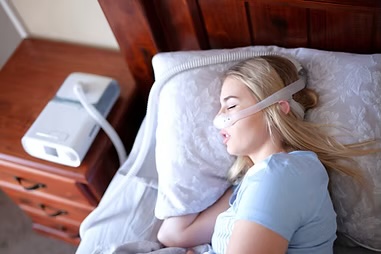
The most well-known treatment for more severe cases of sleep apnea is using a CPAP device. A mask is worn over your nose, or over your nose and mouth, which is connected by a hose to a small machine that sits at the side of your bed. This machine pumps air under pressure through the hose and mask into your airway during sleep, which helps keep your airway open. It is important to note that while CPAP is a good first-choice treatment for OSA, if it is not being used regularly it does not treat sleep apnea. Oral devices have been shown to have higher compliance rates, and thus higher overall effectiveness.
Oral Appliance Therapy
If you've been diagnosed with mild or moderate sleep apnea, or have found that you cannot tolerate a CPAP device, wearing an intra-oral appliance while you sleep might be a good option. These devices are provided by your dental provider and are custom-made to fit your mouth. There are two main types:
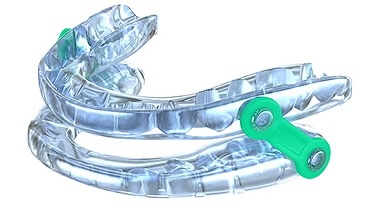
- Mandibular Advancement Device (MAD): This is the most well-known oral appliance. It works by keeping the lower jaw in a forward position, thus keeping the airway open during sleep. MADs typically consist of trays with moldable thermoplastic to fit your upper and lower teeth, and mechanisms such as hinges or elastic bands to adjust the advancement level. Because they are adjustable, your dental healthcare provider can fine-tune the level of advancement of your lower jaw.
- Tongue Retaining Device: Although not as common as a MAD, a tongue retaining appliance — also known as a mandibular repositioning device — can also be effective in treating sleep apnea. This type of oral appliance keeps your tongue out of your airway while you sleep by supporting the bottom jaw in a lowered position, which helps your airway stay open.
Is a diagnosis by a medical healthcare provider necessary?
Yes. If you or a loved one suspect that you may have sleep apnea, you should talk to your doctor or healthcare provider. Sleep apnea can negatively affect your health in many ways. It can lead to or worsen high blood pressure and cardiovascular disease, stroke, increased blood sugar, morning headaches, depression, loss of interest in sex, daytime sleepiness, poor performance at work or school, and more.
If your doctor diagnoses you with sleep apnea, you will likely be referred to a sleep disorder center to participate in a sleep study. A sleep study involves monitoring and recording your breathing, heart rate, and oxygen levels overnight.
What are the benefits of oral appliance therapy for sleep apnea?
Oral appliance therapy is a reliable treatment for sleep apnea. Here are several benefits to consider:
- Improves Quality of Sleep: It can improve the symptoms of sleep apnea including daytime sleepiness, concentration issues, and reduction or elimination of snoring.
- Easy to Use: Oral appliance therapy is less cumbersome and less noisy than using a CPAP.
- Comfortable: Many patients find an oral appliance more comfortable than using a CPAP.
- Easily Portable: It can be taken along easily when traveling.
- No Electricity Required: Unlike a CPAP machine, a night guard does not need to be plugged into an electrical outlet.
If you would like more information about sleep apnea therapy, or would like a consultation with Dental Prosthodontics of Rochester, please contact us to request an appointment.
How can a prosthodontist help patients with sleep apnea?
Step 1 – Screening for Sleep Apnea
During your initial consultation, your prosthodontist will examine you to determine the physical state of your airway and to discover if you may have sleep apnea. Your medical health and history will be reviewed, and your personal preferences will be taken into consideration. Your prosthodontist will oversee the entire treatment process.
Step 2 – Referral to a Medical Specialist
If your prosthodontist believes you have sleep apnea, you will be referred to a board-certified sleep medicine doctor who will have you participate in a sleep study to make an official diagnosis. If sleep apnea is confirmed, your sleep medicine doctor will prescribe either a CPAP device or an intra-oral sleep appliance that is custom-fabricated by your dentist.
Step 3 – Follow-Up Monitoring
After you have used your oral appliance for two to four weeks, you will return to your prosthodontist for a follow-up visit so that your device can be adjusted for optimal fit. You will then repeat the sleep study to acquire objective measurements.
Please note: A CPAP device is just one solution to treat sleep apnea. Many of Dr. Kuyunov's patients who experience mild-to-moderate obstructive sleep apnea find that an oral appliance works well for them, as it positions the jaw and tongue to prevent them from blocking the airway.
Are you interested in sleep apnea therapy in Rochester, NY? Visit Dr. Isaac Kuyunov
Using a sleep apnea appliance reduces the chances of airway blockage during sleep and may help eliminate snoring and other symptoms. If you have mild to moderate sleep apnea, Dr. Kuyunov at Dental Prosthodontics of Rochester is dedicated to helping you breathe easier and sleep better. Call us today at (585) 522-1922 to make an appointment, or click the link below.